

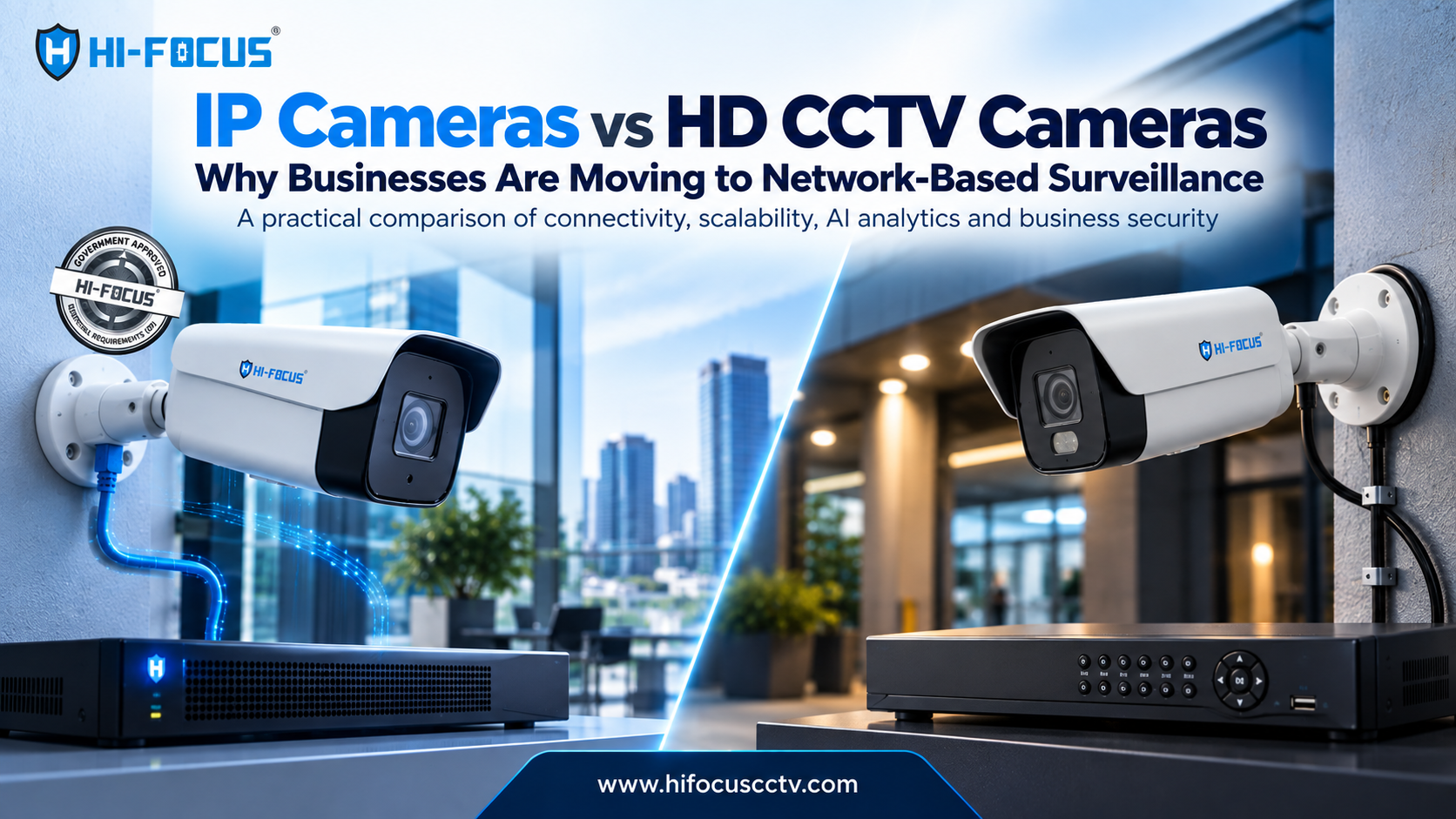
For businesses, CCTV is no longer just about recording what happened after an incident. Modern surveillance systems are increasingly expected to provide clear video, remote access, intelligent alerts, flexible expansion, and useful insights that can support day-to-day operations. This is one of the key reasons businesses are increasingly evaluating IP cameras and network-based surveillance when upgrading older CCTV infrastructure.
At the same time, HD CCTV cameras remain a practical option for many organizations, particularly businesses that already have coaxial cabling and want to improve image quality without replacing their entire surveillance infrastructure. The right choice therefore depends on the site, existing infrastructure, security requirements, and long-term plans.
Key Takeaways
IP cameras transmit video over an IP network, making them suitable for connected, scalable surveillance environments.
HD CCTV cameras generally use coaxial infrastructure and can be a practical upgrade for businesses that already have compatible cabling and DVR/HVR systems.
IP surveillance offers greater flexibility for remote management, analytics, integrations and system expansion.
HD CCTV can make sense when a business wants to reuse existing coaxial infrastructure and control upgrade costs.
Resolution alone should not determine the purchase. Lens quality, low-light performance, storage, network design, AI analytics and reliability all matter.
Businesses with multiple locations, large premises or future automation requirements often benefit from a network-based surveillance architecture.
What Is an IP Camera?
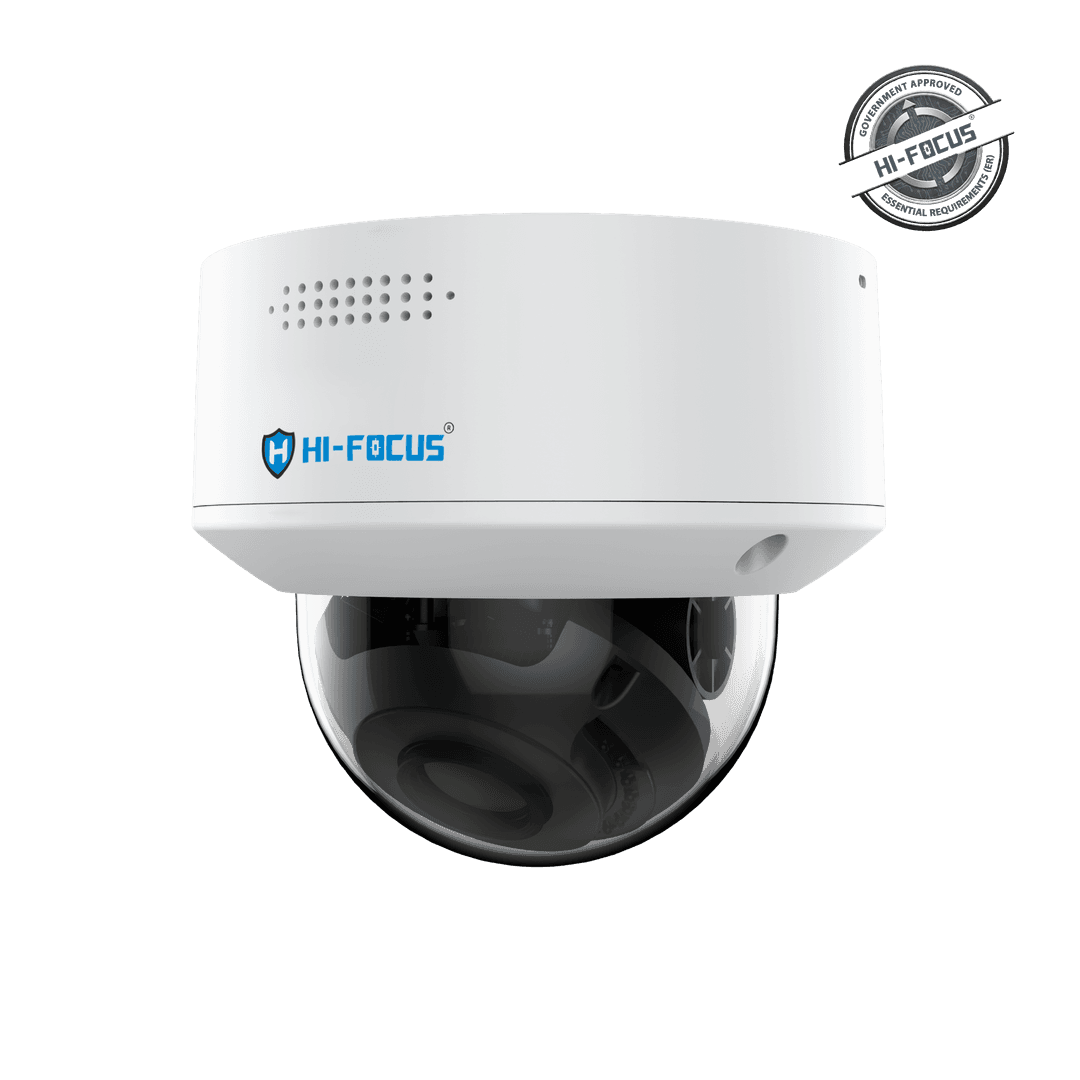
An IP camera (Internet Protocol camera) is a digital CCTV camera that transmits video over an IP network instead of traditional coaxial cabling. It can connect to an NVR, VMS or other network-based surveillance system, making it suitable for remote monitoring, centralized management and scalable security setups.
Modern IP cameras can also support features such as AI analytics, motion detection, people and vehicle detection, two-way audio and event-based recording. With PoE, a single Ethernet cable can carry both power and video data, simplifying installation.
For businesses planning a scalable surveillance system, IP Cameras provide a flexible foundation for modern security infrastructure.
What Is an HD CCTV Camera?
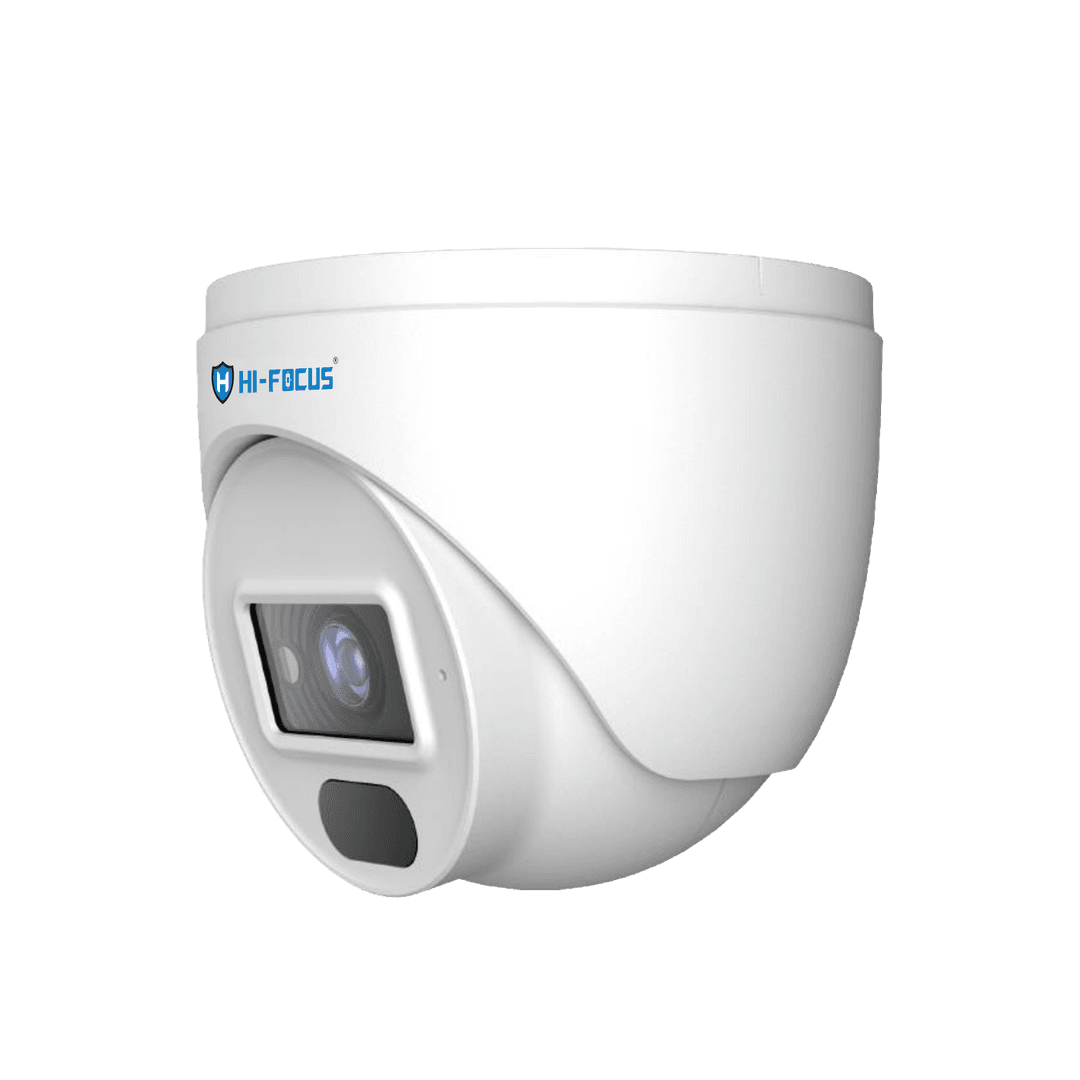
An HD CCTV camera delivers high-definition video while typically using coaxial cabling and a DVR or hybrid recorder. It is a practical choice for businesses that already have coaxial CCTV infrastructure and want to improve image quality without completely replacing the existing system.
HD CCTV cameras are commonly used in offices, retail stores, warehouses, homes and other commercial environments where advanced network features may not be essential.
HiFocus offers a range of HD CCTV Cameras designed for different surveillance requirements, resolutions and installation environments.
IP Cameras vs HD CCTV Cameras: A Practical Comparison
Feature | IP Cameras | HD CCTV Cameras |
Video transmission | IP/network based | Usually coaxial based |
Main recording system | NVR/VMS | DVR/HVR |
Cabling | Ethernet, often Cat5e/Cat6 | Coaxial cable, generally with separate power |
Power | PoE can carry power and data over one Ethernet cable | Usually separate power connection |
Remote management | Strong network-based management capabilities | Available depending on DVR/HVR and setup |
Scalability | Easy to expand as a network system | Expansion depends on recorder and cabling |
AI and analytics | Broad support, including edge and server-based analytics | Available on selected systems, but depends on camera/recorder |
Network integration | Native | More limited |
Multi-site deployment | Well suited | Can be implemented, but architecture is generally less network-centric |
Audio/data capabilities | Can support video, audio and other data | Depends on camera, recorder and cabling |
Existing coaxial infrastructure | Requires network conversion or new Ethernet infrastructure in many deployments | Strong advantage |
Future integrations | Well suited to VMS, access control, analytics and other systems | Depends heavily on recorder and ecosystem |
Best suited for | New installations, enterprises, campuses and scalable systems | Upgrades, smaller sites and existing coaxial infrastructure |
Top IP Cameras Worth Considering for Every Type of Business by HiFocus
HiFocus IP Camera | Best Suited For | Key Features & Capabilities |
Offices, shops, small commercial spaces, and general indoor/outdoor monitoring | 2MP Full HD, 30fps, 4mm fixed lens, up to 30m Smart IR, 15m white light, built-in microphone, PoE, ONVIF and IP66 protection | |
Offices, schools, retail stores and indoor commercial areas | 4MP resolution, 30m Smart IR, 15m white light, built-in microphone, people counting, tripwire and perimeter detection, PoE and IP67 protection | |
Corporate offices, institutions, retail and indoor areas requiring better detail | 5MP resolution, 2.8mm fixed lens, Smart IR, built-in microphone, strong low-light performance and network-based surveillance | |
Warehouses, parking areas, commercial premises and higher-risk outdoor locations | 5MP, 2.7-13.5mm motorized varifocal lens, up to 80m IR, human/vehicle classification, 512GB MicroSD, IP67 and IK10 vandal resistance | |
Hospitals, offices, schools, retail and public-facing areas | 5MP, motorized varifocal lens, 5x optical zoom, people counting, human/vehicle classification, tripwire and perimeter detection, two-way audio, IP67 and IK10 | |
High-security commercial spaces, public areas and outdoor installations | 2MP, 2.7-13.5mm motorized varifocal lens, up to 80m IR, 120dB WDR, human/vehicle classification, face capture, people counting, safety helmet detection, IP67 and IK10 | |
Larger commercial, industrial and institutional surveillance projects | 5MP vandal-resistant bullet design with motorized varifocal capability, advanced analytics and rugged outdoor protection | |
Dark Hunter IP Camera Series | Parking areas, warehouses, low-light premises and poorly illuminated outdoor locations | Designed for colour surveillance in very low-light conditions, with models available in bullet and dome configurations |
Why Businesses Are Moving Toward Network-Based Surveillance
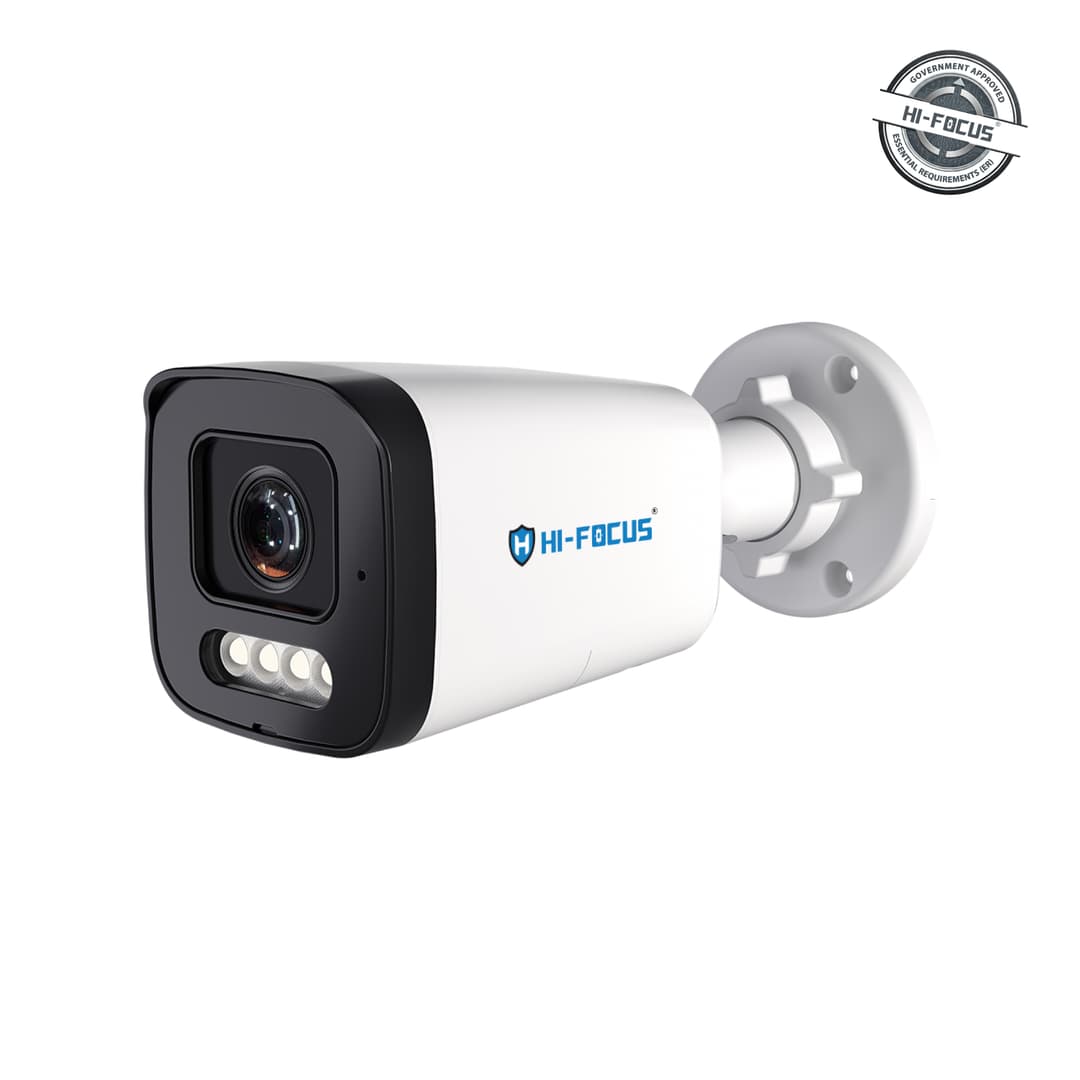
1. IP surveillance is easier to build around a modern network
Most businesses already depend on networks for computers, cloud applications, access systems, communication and data sharing. IP surveillance can become another part of this connected environment.
With a properly designed system, cameras, NVRs, switches, VMS platforms and authorized viewing devices can communicate over the network. This becomes particularly valuable for businesses with multiple departments, buildings or locations.
Cisco notes that IP-based surveillance can use an organization's existing IP infrastructure and can integrate surveillance with network storage, remote management and other business systems.
2. PoE simplifies installation
One of the practical advantages of many IP camera deployments is Power over Ethernet, or PoE.
A compatible Ethernet cable can carry both network data and power to the camera. This can reduce the need for a separate electrical connection at every camera location.
That can simplify installation in offices, warehouses, factories, educational campuses and other commercial environments. It is important to remember that PoE does not eliminate network planning. Switch capacity, cable distance, power budgets and network bandwidth still need to be considered during system design.
3. Remote monitoring becomes part of the architecture
A security manager may need to check a warehouse from the corporate office. A business owner may want to monitor multiple branches. A facility team may need centralized visibility across different buildings.
Because IP cameras are network devices, remote access and centralized management can be built into the surveillance architecture.
This does not mean that every IP camera should simply be exposed directly to the internet. Secure network configuration, authentication, firmware management and appropriate access controls are essential.
4. AI analytics can turn cameras into intelligent security tools
Axis currently reports that nearly 80% of cameras shipped in 2024 included analytics capabilities, while its industry research also indicates that organizations are increasingly using video for operational insights in addition to security.
For businesses, this shift is significant. Surveillance can become part of a wider security and operational strategy rather than remaining a passive recording system.
5. IP systems can scale more naturally
Consider a business that starts with 16 cameras.
Two years later, it adds another building and needs 24 additional cameras.
With a network-based architecture, expansion can be planned around additional network infrastructure, NVR capacity, storage and camera requirements.
The exact expansion process depends on the equipment, but the fundamental IP architecture makes network-based growth practical.
This is especially relevant for:
Manufacturing facilities
Warehouses
Hospitals
Educational institutions
Retail chains
Corporate campuses
Hotels
Residential communities
Logistics facilities
Multi-location businesses
Does That Mean HD CCTV Cameras Are No Longer Useful?
No.
This is where businesses need to avoid making technology decisions based purely on trends.
If an organization already has good-quality coaxial cabling, functional DVR infrastructure and a relatively straightforward surveillance requirement, replacing everything with IP equipment may not always be necessary.
HD CCTV can be particularly practical when:
Existing coaxial cabling is in good condition
The site has a limited number of cameras
Remote access requirements are straightforward
Advanced analytics are not a major priority
The organization wants a controlled infrastructure upgrade
The existing DVR/HVR system can support the required cameras
For these situations, upgrading cameras or recorders can deliver meaningful improvements without rebuilding the entire surveillance infrastructure.
This is one reason HiFocus maintains both network CCTV cameras and HD surveillance options rather than treating one technology as suitable for every business.
Where IP Cameras Make More Sense
1. Multi-site monitoring
Businesses operating several branches can benefit from centralized network-based surveillance and management.
2. Advanced analytics
If person detection, vehicle detection, intrusion monitoring, line crossing or other intelligent functions are important, an IP ecosystem can provide a strong foundation.
3. High-detail monitoring
IP cameras are available across a wide range of resolutions and form factors. The right choice depends on the scene, lens, distance and identification requirements rather than megapixels alone.
4. Large-area coverage
For campuses, industrial sites, highways and large outdoor areas, Network PTZ Cameras can provide pan, tilt and optical zoom capabilities for monitoring areas where fixed cameras alone may not provide the required coverage.
5. Centralized recording
An appropriately specified NVR can centralize recording from network cameras while supporting different storage and monitoring requirements.
Check out our latest article on Top 5 Reasons Businesses Should Invest in IP Cameras
What Should Businesses Consider Before Choosing?
Before choosing IP or HD CCTV, evaluate:
1. Existing cabling:Do you already have usable coaxial infrastructure, or are you starting from scratch?
2. Number of cameras: A 6-camera office and a 200-camera manufacturing facility have very different requirements.
3. Storage: Higher resolution and frame rates can increase storage requirements. Recording schedules, compression, retention periods and event-based recording should be considered together.
4. Network capacity: IP video introduces network traffic. Switch capacity, uplinks, bandwidth, segmentation and redundancy should be considered during design. Cisco specifically highlights the importance of network planning and QoS in IP video environments.
5. Analytics: Decide whether the business needs basic recording or intelligent functions such as person/vehicle detection, intrusion alerts or other AI capabilities.
6. Future expansion: If the organization expects additional buildings, cameras or locations, network-based architecture may provide greater flexibility.
7. Cybersecurity: Connected cameras should be treated as network devices. Strong passwords, access controls, firmware updates, network segmentation and secure remote access are important.
8. Integration: Consider whether CCTV may eventually need to work alongside access control, alarms, intercoms, VMS platforms or other systems.
Why the CCTV Brand and Ecosystem Matter
Choosing the camera type is only one part of a commercial surveillance project.
The manufacturer, recorder, software, network equipment, technical support, warranty and long-term product availability can all affect the outcome.
For Indian businesses, working with an established Indian CCTV brand can also make procurement, service, product availability and project support easier to manage.
HiFocus provides a broad surveillance portfolio covering IP cameras, HD CCTV cameras, Smart WiFi cameras, network PTZ cameras, NVRs, hybrid recorders and AI-powered surveillance solutions.
Its systems are designed for applications across sectors including healthcare, education, retail, corporate environments, industrial facilities and other commercial locations.
Businesses comparing Indian CCTV brands can therefore look beyond individual camera specifications and evaluate the wider ecosystem available from the manufacturer.
Final Thoughts
The choice between IP cameras and HD CCTV cameras should depend on the business's infrastructure, security requirements, budget and future expansion plans.
HD CCTV can be a practical option when existing coaxial infrastructure is still usable. IP cameras, on the other hand, offer greater flexibility for businesses looking for network-based monitoring, PoE, AI analytics, centralized management and future scalability.
Rather than choosing based only on resolution or price, businesses should evaluate the complete surveillance ecosystem, including cameras, NVRs, storage, networking, analytics, cybersecurity and after-sales support.
Frequently Asked Questions
1. What is the main difference between IP cameras and HD CCTV cameras?
IP cameras transmit digital video over an IP network, while HD CCTV cameras commonly use coaxial infrastructure and connect to DVR or hybrid recording systems. The difference is primarily the underlying system architecture, not simply image resolution.
2. Are IP cameras better than HD CCTV cameras?
Neither technology is automatically right for every application. IP cameras can be more suitable for businesses requiring scalability, network integration and advanced analytics, while HD CCTV can be practical for sites with existing coaxial infrastructure and straightforward surveillance requirements.
3. Do IP cameras require an NVR?
An NVR is commonly used to record and manage IP cameras, although IP cameras can also work with compatible VMS, edge storage and other architectures depending on the deployment.
4. Can IP cameras use WiFi?
Yes. Some IP-based surveillance cameras use WiFi rather than wired Ethernet. However, wired IP connections are generally preferable for critical surveillance locations where stable connectivity is important.
5. Can I upgrade HD CCTV cameras to IP cameras?
Yes, but the approach depends on the existing cabling, recorder and site infrastructure. In many cases, moving to IP involves upgrading network cabling and replacing or supplementing the recording infrastructure.
6. Are HD CCTV cameras still suitable for businesses?
Yes. HD CCTV cameras can be suitable for offices, shops, warehouses and other businesses, especially when existing coaxial infrastructure is available and advanced network-based features are not a primary requirement.
7. Why are businesses choosing IP cameras?
Businesses are increasingly considering IP cameras because they can support network-based remote management, PoE, scalable deployments, AI analytics, centralized recording and integration with other security and business systems.
8. Do IP cameras need internet access?
Not necessarily. An IP camera can operate on a local network without direct internet access. Internet connectivity is generally required only for specific remote-access or cloud-based functions.
9. Which is better for a large business, IP or HD CCTV?
Large businesses should evaluate factors such as the number of cameras, locations, network infrastructure, storage, analytics, integration requirements and future expansion plans. For many large and distributed deployments, an IP architecture can provide useful flexibility, but the final design should be based on the site's requirements.
10. What should I look for when buying IP cameras in India?
Look beyond megapixels. Evaluate image quality in the actual lighting conditions, lens and field of view, night performance, AI capabilities, storage compatibility, network requirements, cybersecurity features, NVR/VMS compatibility, warranty and after-sales support. For commercial projects, the manufacturer's overall ecosystem and technical support are equally important.