Large enterprises don’t struggle with whether to deploy CCTV camera solutions; they struggle with how to deploy them at scale. Many start by mixing cameras from one brand, NVRs from another, analytics from a third, and software from a fourth. On paper, this looks flexible and cost-effective. In reality, it often creates blind spots, delays, security gaps, and ballooning operating costs.
That’s why global enterprises, from corporate campuses to industrial facilities, are increasingly moving toward end-to-end CCTV solutions instead of stitching together multiple brands. This shift isn’t about brand loyalty. It’s about reliability, accountability, and long-term control.
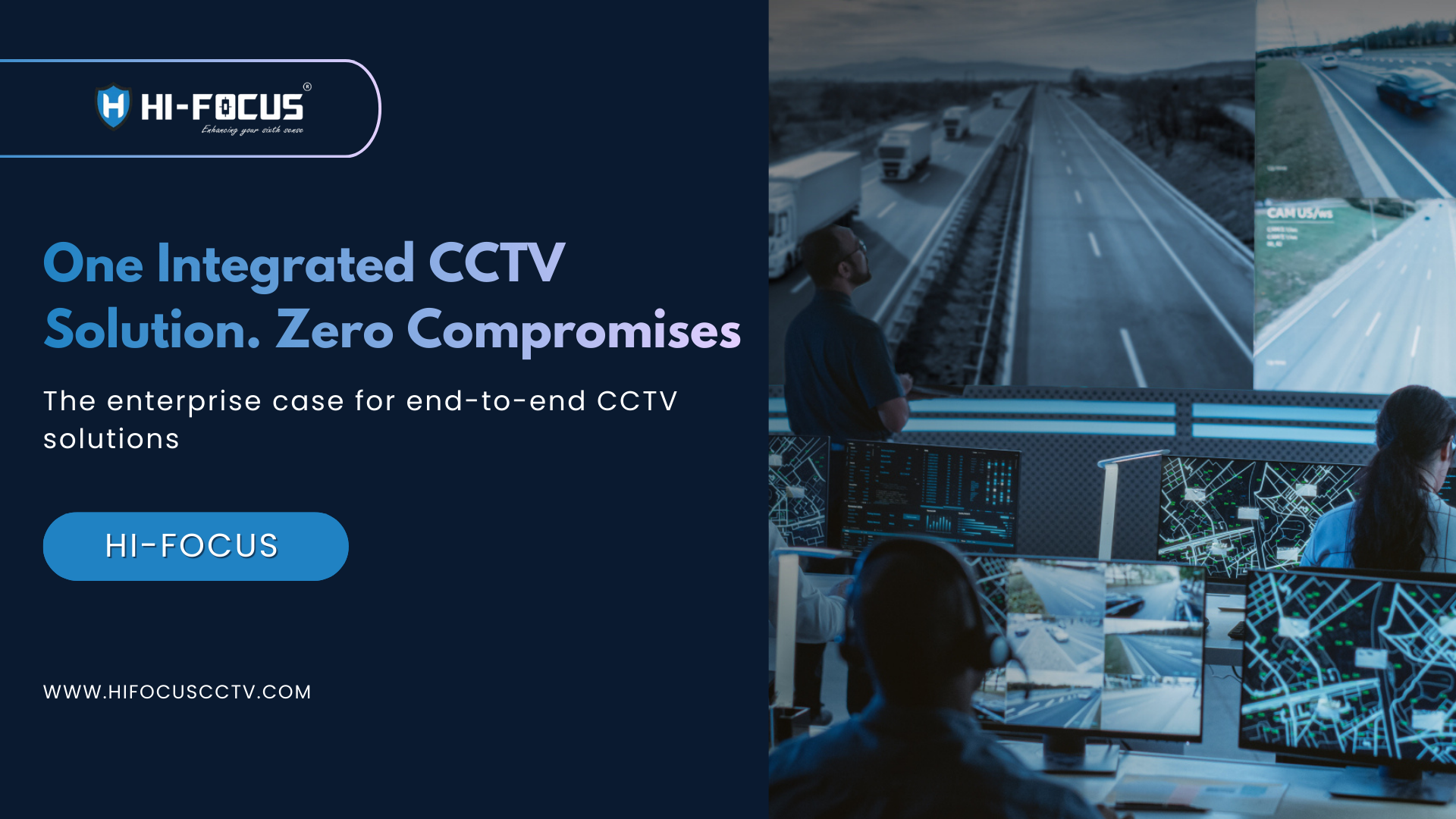
What Is an End-to-End CCTV Camera Solution?
An end-to-end CCTV solution is a fully integrated surveillance ecosystem designed, developed, tested, and supported by a single provider. It typically includes:
CCTV cameras (HD, PTZ, IP Cameras)
NVRs and storage infrastructure
Installation, commissioning, and ongoing support
The Hidden Problems with Mixing Multiple CCTV Brands

1. Compatibility Isn’t guaranteed.
Even if devices claim compliance with standards like ONVIF, real-world deployments reveal gaps, limited features, unstable streams, or analytics that simply don’t work together.
2. Fragmented Support and Blame Games
When something breaks, vendors often blame each other. IT and security teams lose time coordinating multiple service providers instead of fixing the problem.
3. Higher Total Cost of Ownership (TCO)
Initial hardware savings disappear quickly due to:
Integration costs
Custom middleware
Frequent maintenance
Downtime and productivity loss
4. Inconsistent Security Posture
Different firmware cycles, patching schedules, and cybersecurity standards create vulnerabilities especially across global operations.
Benefits of Choosing End-to-End CCTV Camera Solutions
1. Single-Vendor Accountability
With one solution provider, responsibility is clear from system design to post-deployment support. Enterprises know exactly who to call and who owns the outcome.
2. Faster Deployment Across Locations
Standardized architectures allow faster rollouts across offices, warehouses, factories, and retail locations without re-engineering each site.
3. Consistent Performance & Analytics
End-to-end CCTV camera solutions ensure AI analytics, alerts, and dashboards behave consistently across all cameras and sites, improving incident response and decision-making.
4. Lower Operational Complexity
One interface for operators
One update cycle
One cybersecurity framework
Real-World Use Cases Where Integration Matters Most
Corporate Campuses

Unified access control, facial recognition, and perimeter monitoring reduce security risks while supporting compliance and audits.
Manufacturing & Industrial Sites

Integrated CCTV camera solutions improve safety compliance, monitor hazardous zones, and reduce theft without system lag or downtime.
Logistics & Warehousing
_1731556256994_740d9bff3fbd.png&w=3840&q=75)
Real-time monitoring, vehicle tracking, and AI-based incident detection work best when cameras, storage, and analytics are fully aligned.
Decision-Makers Ask: Is Single-Brand Risky?
A common concern is vendor lock-in. In practice, enterprises mitigate this by choosing providers that:
Follow global standards (e.g., ISO security and quality benchmarks)
Offer modular scalability
Provide long-term firmware and software support
Have proven global deployment experience
How CCTV Camera Solutions Support Business Goals
_1742215854204_a131ae04e6ea.jpg&w=1920&q=75)
Risk Reduction: Fewer system failures and blind spots
Cost Control: Predictable maintenance and upgrade cycles
Compliance: Easier audits and reporting
Decision Intelligence: Actionable insights, not just recordings
This is why integrated CCTV solutions are now viewed as strategic infrastructure not just security hardware.
Choosing the Right CCTV Camera Solutions: A Practical Checklist
Proven enterprise deployments
Full control over hardware, software, and analytics
Strong post-installation support
Cybersecurity-first architecture
Clear roadmap for AI and automation
FAQs
Why do large enterprises prefer end-to-end CCTV camera solutions?
Because they reduce complexity, ensure compatibility, and provide single-vendor accountability across large, multi-site deployments.
Are integrated CCTV camera solutions more expensive?
Upfront costs may be similar, but the total cost of ownership is usually lower due to reduced integration, maintenance, and downtime expenses.
Can end-to-end CCTV solutions scale globally?
Yes. They are designed for standardized deployment across regions while maintaining centralized control and compliance.
Do complete cctv camera solutions support AI analytics?
Most enterprise-grade solutions include built-in or upgradeable AI analytics for behavior detection, intrusion alerts, and operational insights.
Why Enterprises Trust HIFOCUS (Brand Perspective)
HIFOCUS delivers end-to-end CCTV camera solutions engineered for enterprise-scale reliability. From cameras and recording systems to intelligent analytics and centralized management, everything is designed to work as one ecosystem, helping organizations reduce risk, simplify operations, and stay future-ready.
If you’re evaluating whether a unified CCTV approach makes sense for your business, explore HIFOCUS solutions or speak with a specialist for a tailored assessment.
Get a customized quote for your business today.