

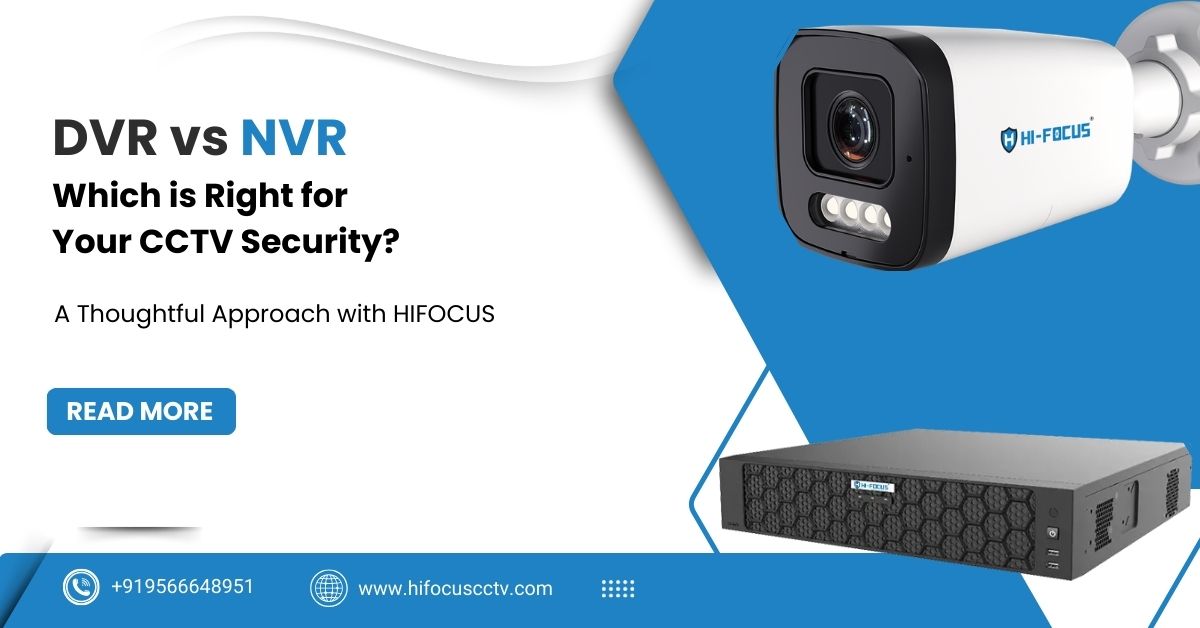
Security is a top priority for modern organizations. From hospitals and corporate offices to educational institutions and real estate projects, surveillance systems play a vital role in protecting assets, employees, and visitors.
But when businesses start exploring CCTV security services, they often encounter two key technologies: DVR (Digital Video Recorder) and NVR (Network Video Recorder).
At first glance, both seem similar. They record footage from CCTV cameras and store it for monitoring or investigation. However, the technology behind them is quite different.
Choosing the wrong system can lead to limited scalability, lower video quality, or expensive upgrades later.
In this guide, we’ll explain the difference between DVR and high performance network video recorders nvr, and help you decide which system is best for your business.
Understanding Video Recorders in CCTV Systems

A video recorder acts as the central control unit of a CCTV surveillance system.
It performs several important tasks:
Collects video feeds from cameras
Stores footage for future review
Allows live monitoring and playback
Manages multiple cameras in a network
Most surveillance systems today use either:
Digital Video Recorders (DVR)
Network Video Recorders (NVR)
Both technologies serve the same purpose, but they work with different types of cameras and infrastructure.
What is a DVR (Digital Video Recorder)?
A DVR system is designed to work with analog CCTV cameras.
In this setup, cameras capture video footage and send it to the DVR through coaxial cables. The DVR then converts the analog signal into a digital format and stores the recording.
How DVR Systems Work
Analog cameras capture video footage.
The footage is transmitted via coaxial cable.
The DVR processes and records the video digitally.
Key Advantages of DVR
1. Cost Effective Setup
DVR systems are often more affordable for businesses that need basic surveillance coverage.
2. Compatible With Existing Analog Systems
Many organizations already have analog cameras installed. DVR allows them to continue using the same infrastructure.
3. Reliable for Small to Medium Installations
DVR systems work well in environments where advanced features are not required.
Where DVR Systems Are Commonly Used
Small offices
Schools and educational institutions
Retail stores
Basic security setups
However, as surveillance needs become more advanced, many organizations move toward IP based solutions.
What is an NVR (Network Video Recorder)?
A high performance network video recorder NVR works exclusively with IP (Internet Protocol) cameras.
Unlike analog systems, IP cameras send digital video directly over a network, which allows higher video quality and smarter features.
How NVR Works
NVR systems connect to cameras via:
LAN networks
Ethernet cables
PoE (Power over Ethernet)
The video data is processed inside the camera itself and then sent to the recorder.
Key Advantages of NVR
1. Higher Video Quality
NVR systems support HD cameras in 4MP, 8MP, and even 4K, providing clearer footage.
2. Smart Surveillance Features
Advanced features include:
AI based motion detection
Face recognition
People counting
Intrusion alerts
3. Easier Installation
With PoE technology, a single cable can provide both power and data.
4. Better Scalability
Organizations can expand surveillance networks without major infrastructure changes.
Where NVR is Commonly Used
Corporate offices
Smart campuses
Hospitals with advanced monitoring needs
Real estate projects
Smart cities and large facilities
DVR vs NVR: Key Differences Explained
Feature | DVR | NVR |
Camera Type | Analog Cameras | IP Cameras only |
Video Processing | Done by DVR | Done by Camera |
Video Quality | Standard HD | HD to 4K |
Cabling | Coaxial cables | Ethernet network cables |
Scalability | Limited | Highly scalable |
Smart Features | Basic | Advanced analytics |
In simple terms:
DVR = Traditional analog CCTV systems
NVR = Best for modern, high performance surveillance
Where HVR Fits: The Hybrid Advantage
Many businesses today already have analog CCTV cameras installed, but they also want to adopt modern IP cameras.
Replacing the entire system can be expensive and time-consuming.
This is where a hybrid video recorder (HVR) becomes extremely valuable.
What is an HVR?
An HVR (Hybrid Video Recorder) supports both analog cameras and IP cameras in a single system.
This allows businesses to upgrade their surveillance infrastructure gradually without replacing all cameras at once.
HiFocus HVR: A Flexible Upgrade Solution
One of the key advantages offered by HiFocus CCTV solutions is its hybrid video recorder technology.
HiFocus HVR systems are designed to support:
Traditional analog cameras are used with DVR systems
Modern IP cameras are used with NVR systems
This hybrid approach allows businesses to:
Continue using existing cameras
Add new IP cameras when needed
Upgrade surveillance systems without major infrastructure changes
For organizations such as hospitals, corporate campuses, manufacturing facilities, and educational institutions, this flexibility makes system upgrades much more practical and cost-efficient.
How to Choose the Right CCTV Recorder
The best CCTV system depends on several important factors.
Choose DVR If
You already have analog cameras installed
Surveillance requirements are basic
The budget is limited
Choose NVR If
You are installing a new CCTV system
You need high-resolution video and smart features
The facility requires future scalability
Choose HVR If
Your facility has existing analog cameras
You want to add IP cameras gradually
You want a flexible and upgrade-friendly system
Factors to Consider Before Installing CCTV Systems
Before choosing between DVR and NVR systems, businesses should evaluate several factors.
1. Existing Infrastructure
If analog cameras already exist, DVR or HVR solutions may be more practical.
2. Video Quality Requirements
High-security environments often require HD or 4K recording.
3. Scalability
Growing organizations should choose systems that allow future expansion.
4. Integration Capabilities
Modern CCTV systems often integrate with:
Access control systems
Alarm systems
Smart building technologies
5. Long-Term Cost
While DVR may have lower upfront costs, NVR and hybrid systems often offer better long-term value.
Choosing the Right CCTV Security Services Partner
Selecting the right recorder technology is only one part of building an effective surveillance system.
Professional CCTV security services help businesses:
Assess security requirements
Design surveillance layouts
Install and configure camera systems
Maintain and upgrade infrastructure
This ensures the system delivers reliable monitoring, scalability, and long-term performance.
For businesses planning new installations or upgrades, guidance from experts like HIFOCUS can make the process significantly easier.
Final Thoughts
Understanding the difference between DVR and NVR systems is essential when planning CCTV installations.
DVR systems work best with traditional analog cameras.
NVR systems support modern IP cameras and advanced monitoring capabilities.
HVR systems combine both technologies, offering flexibility for businesses upgrading existing infrastructure.
For organizations looking to modernize their surveillance systems, hybrid solutions can provide the perfect balance between performance, cost, and scalability.